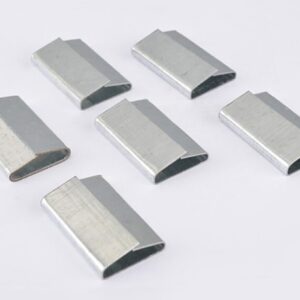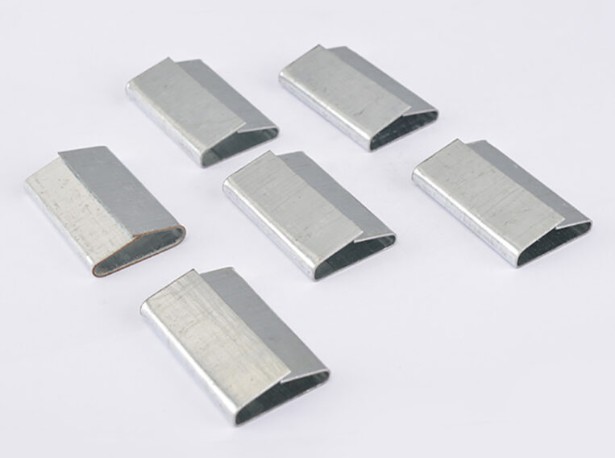
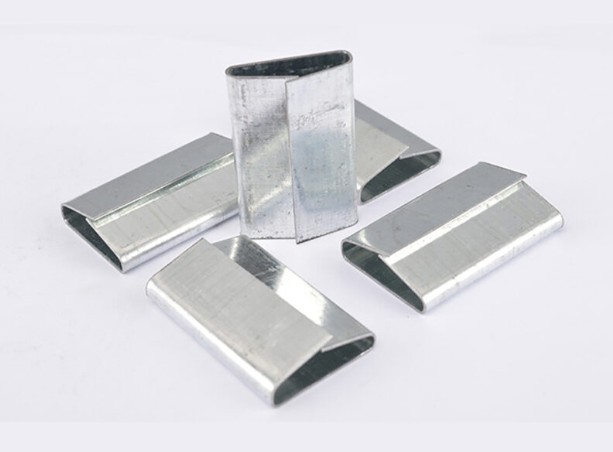
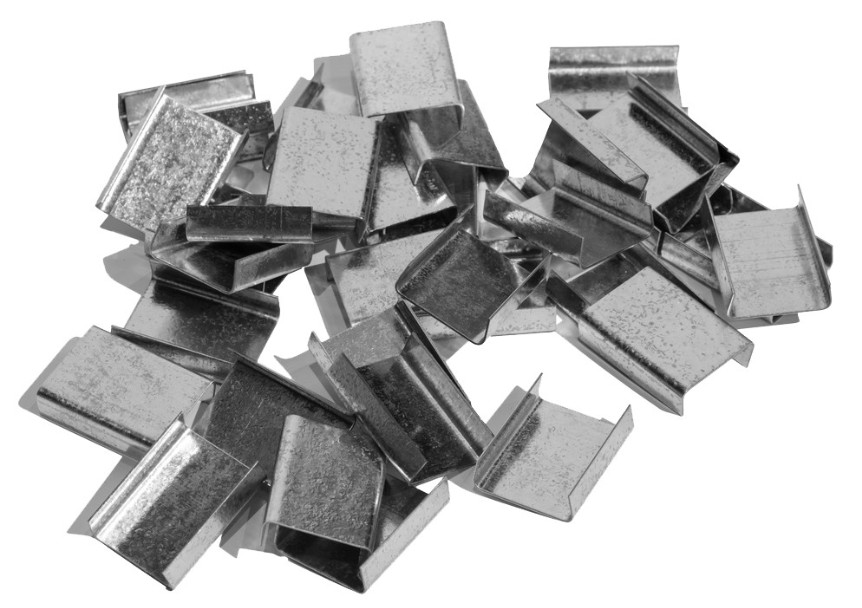
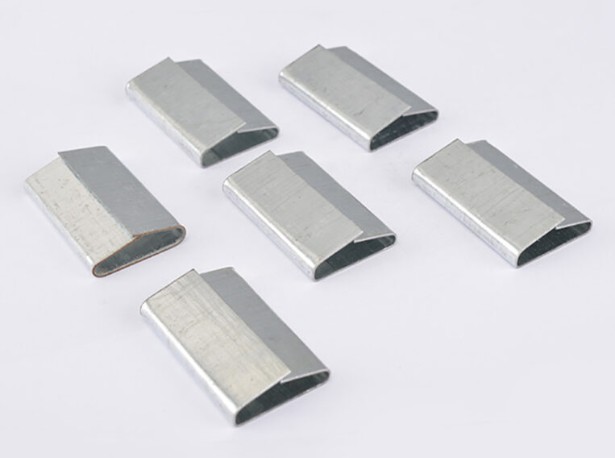
Pallet banding clips in four sizes let you fasten steel strapping around heavy, rigid loads using a pneumatic tensioner and sealer. When your packing line handles steel coils, castings, pipes, timber bundles or bricks, the strap joint must survive edges, vibration and rough handling. A crimped carbon-steel clip is what holds the tension the tool puts in, long after the trigger is released.
Why pallet banding clips matter for load security
A pneumatic tensioner pulls considerably harder than a hand tool. The clip receives that force and must deform without cracking when the sealer jaws notch it into both strap ends. If the clip is the wrong width, the sealer cannot close it properly: too wide and the jaws miss, too narrow and there is not enough material gripping the strap. The result in either case is a joint that opens under load.
- A slipped joint during transport can mean damaged goods, rejected deliveries and liability claims.
- Worn sealer jaws leave shallow notches, so the crimp on the first joint of every shift should be inspected.
- Rusted clips crimp badly and can mark the goods, which is why dry indoor storage matters.
How these pallet banding clips form a lasting joint
The clip slides over the two overlapping ends of the steel strap. After the pneumatic tensioner brings the strap to the required tension, the sealer is closed on the clip. Its jaws cut notches into the clip and both strap layers simultaneously, locking them together. The loose end is then cut. There is no heat, no weld and nothing in the joint that ages. One clip is used per joint, making consumable cost per pallet straightforward to calculate.
The material is high-strength carbon steel. It deforms where the sealer bites without cracking or releasing under pull. That characteristic is critical for loads exposed to vibration, handling stress and demanding transport conditions.
Where these clips fit and where they do not
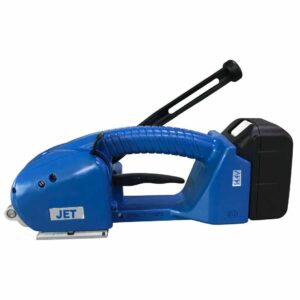
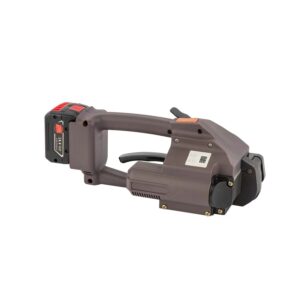
These clips are designed for pneumatic tensioners and sealers. They are not intended for manual strapping tools, which apply lower sealing forces. If your operation uses 16 mm strap with a hand tool, a different clip type is required.
- Suited for: steel sections, coils, castings, pipes, timber and bricks.
- Suited for: manufacturing plants, metal processing, timber yards, construction material distributors and export logistics.
- Not needed if you use a sealless tool that cuts the two strap ends into each other without a clip.
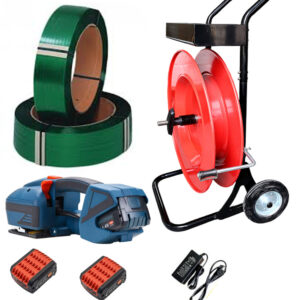
- If loads are not hot, sharp-edged or extremely heavy, PET strap with a battery tool may cost less per pallet.
What to check before ordering pallet banding clips
Match the clip width to your strap width. A 19 mm clip goes on 19 mm strap, not 16 or 25 mm. The four available sizes are:
- 16 × 40 mm, packed in boxes of 1 000 units
- 19 × 57 mm, packed in boxes of 1 000 units
- 25 × 57 mm, packed in boxes of 1 000 units
- 32 × 57 mm, packed in boxes of 800 units
Count how many joints you make per pallet, multiply by the number of pallets you strap per week and order accordingly. Confirm that your pneumatic tool is set to the correct air pressure; under-tensioned strap produces a joint that slips under the first bump. Store all clips in a dry area to prevent corrosion before use. Wear gloves and eye protection when working with tensioned steel strap, as cut ends can spring and edges are sharp.